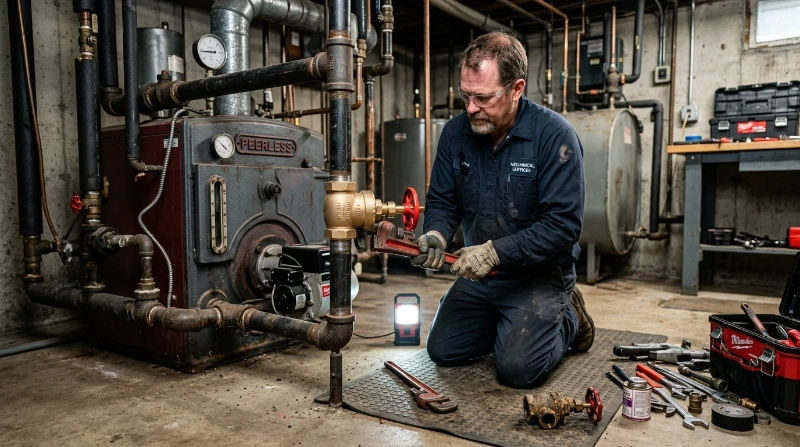
Some boilers in the blocks around downtown Richmond are original 1930s or 1940s cast iron, and a no-heat call on one of them starts the same way every time. We check that the emergency switch at the top of the stairs is on, raise the thermostat a few degrees above room temperature, and see whether the boiler gets a call for heat at all.
If there's a call and no flame, we work through the burner. On standing pilot units we test the thermocouple, then check for 24 volts at the gas valve. We look at the rollout and spill switches near the draft diverter too, because a tripped switch on an old chimney can point to a draft problem that matters more than the part itself.
Once it's firing, we move to the steam side. The pigtail under the pressuretrol on these older boilers is often packed solid with sludge. We clean or replace it, confirm the gauge reads, and blow down the low water cutoff to make sure the burner shuts off. Then we run a flashlight along the base for any wet section.
Here's the honest part: if the cast iron is dry and the chimney drafts properly, a failed control on an original Richmond boiler is a repair, not a replacement. We show the homeowner the bad part, write the estimate first and leave a printout of what we tested. A leaking section would change that conversation, and we say so plainly.