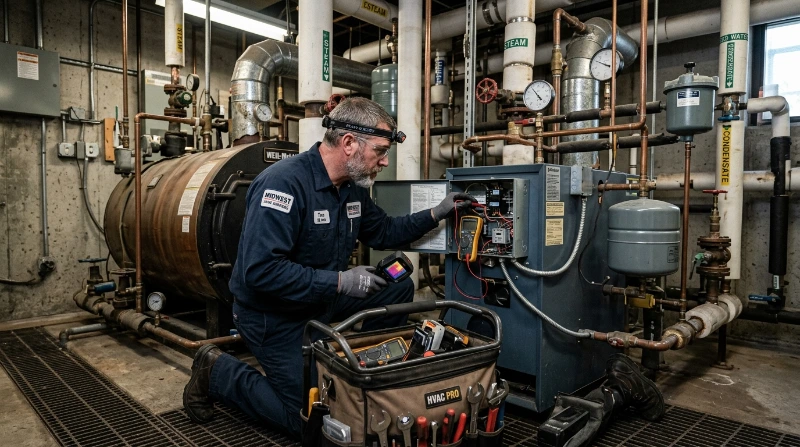
Quick observation first, before we touch a single control. On a night call in Warren we stop at the top of the basement stairs and look at the emergency switch, because half the time somebody flipped it thinking it was a light. Then we smell the air near the boiler. Any gas odor and we stop, get everyone outside and call the gas utility. No heat is miserable. A gas leak is dangerous, and it always comes first.
Next we read the boiler like a dashboard. Sight glass first: is there water, and where does it sit? If the glass is empty, the low water cutoff did its job and shut the burner down. We find out why before we refill anything, because a boiler that ran itself low needs to cool before cold water goes in. Then the pressure gauge, the pressuretrol setting and whether a reset on the controls has tripped.
Most midnight calls trace back to a short list: a stuck feeder, a dead thermocouple on a standing pilot unit, a cracked hot surface igniter, a tripped rollout or spill switch, or a clogged pigtail leaving the pressuretrol blind. We check for 24 volts at the gas valve and confirm the thermostat is really calling. Root cause before parts. Swapping parts at 1am just to get heat back usually means a second call at 3am.
Before we leave, we walk the homeowner through what failed and hand them the old part. We show them how to read the water line, where the gas cock and the water feed valve are, and we tag both. If we had to get the house warm overnight with a short term fix, we write that down on the ticket so nobody forgets the permanent repair in daylight.