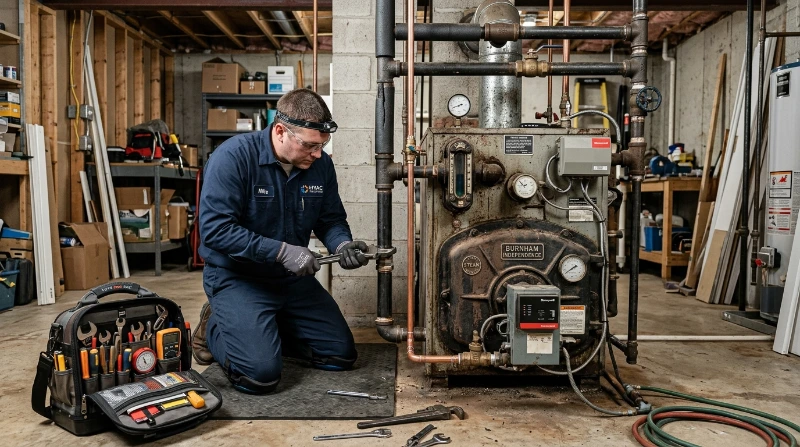
Quick observation first. Before we touch a Burnham, we stand back and read it: water line in the sight glass, needle on the 0 to 3 psi gauge, the pressuretrol setting, and whether the low water cutoff has a blowdown valve that actually turns. On a lot of Warren Burnhams we find the pressuretrol cranked to 5 or higher. That one setting explains half the banging calls we get.
Next we pull the burner access panel. On older Burnham units we often see burner tubes that have shifted or picked up rust scale, which gives you a lazy, uneven flame. We pull the tubes, clean the ports, and seat them square. Every boiler is a little different, and after enough of them you get used to what a healthy Burnham flame looks like.
Then the wiring. We often find the thermostat relay harness or a spade connector working loose after years of heat and vibration. The boiler acts haunted: it runs some days and sits dead on others. Gary checks for 24 volts at the gas valve on a call for heat and tightens every connection before anyone talks about new parts.
We finish with a combustion analysis through the flue ahead of the draft hood and a low water cutoff test with the homeowner watching. If the burner does not shut off when the water drops, that boiler does not run until it is fixed. The printout stays taped to the jacket so the next tech knows where it started.