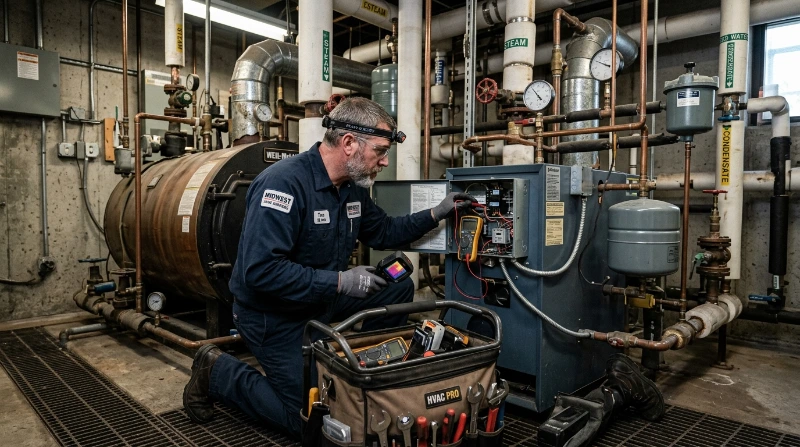
First thing we do on an Armada call is figure out what era we are standing in. A village house off Main Street might have pipe from the 1890s feeding a 1950s boiler. A farmhouse on Armada Ridge Road might have gravity steam piping that was built for coal. The boiler on the floor is often the youngest part of the system, and that changes how we diagnose it.
Those old gravity systems have big mains and lots of iron, and they were designed to run on ounces of pressure. The steamfitters who put them in knew that. We usually find the pressuretrol cranked to 5 or more by someone who thought more pressure meant more heat. It does not. It means banging, spitting vents and a higher fuel bill.
Then we follow each main to the end and look for a main vent. In big farmhouses we sometimes find a single small radiator vent doing the job of a main vent, or no vent at all. Air has to leave the mains before steam can fill them. If the far rooms take an hour to warm up, that is usually where the problem lives.
Before we leave, we teach the five valves. Out here a frozen house is a long drive from help, so we tag the gas to the boiler, the water feed, the gas to the water heater, the main water shutoff and the emergency switch at the top of the stairs. A homeowner who knows those five can buy a lot of time on a bad night.