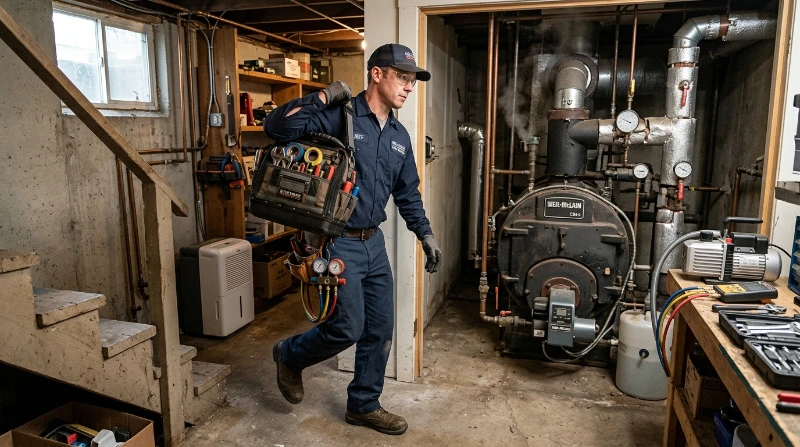
The older homes along Van Dyke Avenue and 26 Mile Road in Washington Township were mostly built between 1960 and 1978, and many have already had one boiler swap. That's where a lot of our work starts. The boiler might be only 20 years old, but the near-boiler piping was done in a hurry, and the system has never run right since.
Let's take a look at the header. We pull out the manual and compare it to what's on the wall: riser count, header height, equalizer size. Too often the installer reused the old connection points and skipped the manufacturer's piping diagram. The result is wet steam, a water line that jumps in the sight glass and banging in the first room off the boiler.
Then we check the Hartford Loop. The tee where the equalizer meets the return should sit just below the normal waterline, at the height the manual calls for. If it's too low or missing, a leaking return can drain the boiler. We also test the low water cutoff, because a boiler that surges can trip it and lock out on a cold night.
Sometimes the answer is repiping the near-boiler section, not replacing a boiler with plenty of life left. We lay out both options in writing. Homes closer to the Romeo line may have older piping, so we look at the whole system before recommending anything. The goal is a steady water line and quiet pipes all winter.