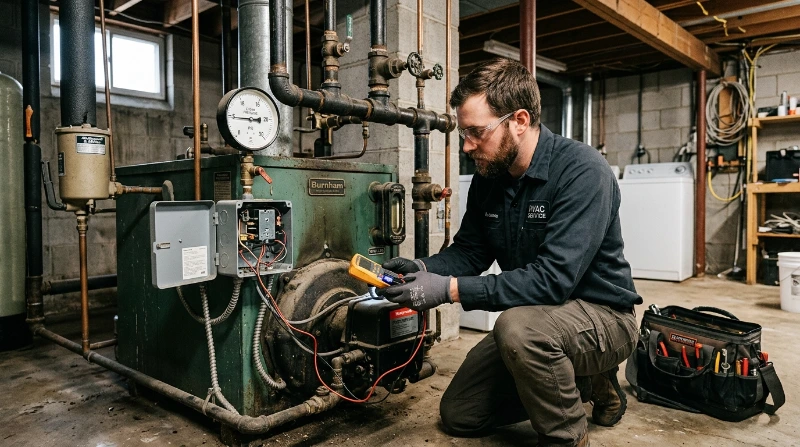
A typical New Haven call comes from a village home off Main Street or near the Romeo Plank corridor, and the boiler is often a 1940s or 1950s Weil-McLain or Burnham. Quick observation first: we read the sight glass before we touch anything. If the water line is low and the automatic feeder is clicking on every hour, water is leaving the system somewhere.
So we follow the water. We check the wet return along the basement floor for rust weeping at the fittings, look under the boiler for a damp spot at the base, and listen at the radiators for a vent spitting steam. In homes that have passed through several owners, we also find patched returns and a Hartford Loop tee sitting at the wrong height.
Next comes the control side. Gary pulls the pressuretrol and checks the pigtail, because a loop packed with sludge means the control never sees real pressure. We set the cut-in around half a pound and keep the cut-out under 2 psi. Then we blow down the low water cutoff and watch the burner drop out, which is the test that matters most.
Before we leave, the homeowner sees the failed part and gets the numbers written down: pressure settings, water line, what we replaced. New Haven is a long drive from Warren, so we want the next visit to be a tune-up, not another no-heat call. Tags on the gas valve and the water feed valve finish the job.