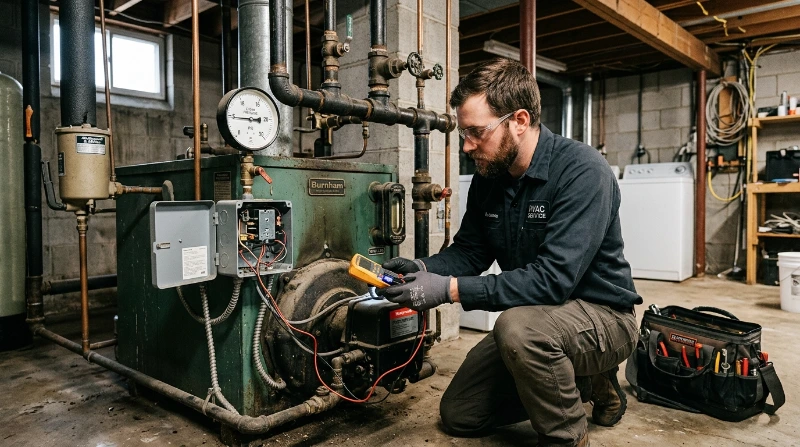
A common call from the lake side of the township: the boiler heats, but the automatic feeder clicks on every day and the owner hears water running into it. Water added that often is water leaving somewhere. Fresh water also brings oxygen and minerals, so a feeder left alone eats the boiler slowly. Our first step is the counter on the feeder, if it has one, to see how many gallons are going in.
Next we look at the obvious places. We check the radiator vents upstairs for spitting, the valve packings, and every union and fitting on the near-boiler piping. A steam leak at a vent can lose more water than you would think over a week. Then we get low and follow the wet return along the floor, looking for rust stains, damp spots and the crusty bloom that marks a slow weep.
On a cottage built close to the water, the wet return often runs right where moisture collects. If the pipe looks sound, we sometimes isolate the boiler and watch the water line with the burner off. A boiler that loses water while sitting still points toward a cracked section, which is a very different conversation than a simple pipe repair.
Whatever we find, we put it in writing, show the owner the bad pipe or part, and explain the choice. Most of the time it is a return or a fitting, not the boiler itself. We also tag the water feed valve and show the owner how to watch the sight glass, so the next leak gets caught before the feeder has hidden it for a whole season.