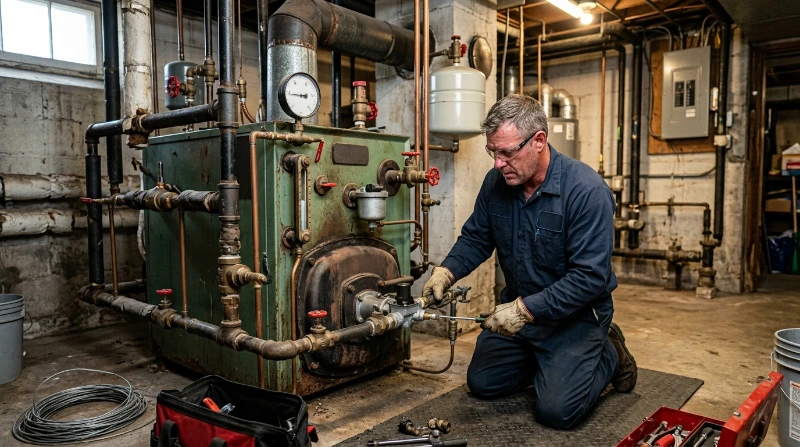
The phone rings early: the house near downtown is cold and the boiler is quiet. The first thing we ask is whether the emergency switch on the stairway wall is on, because it gets bumped more than people think. Once we are on site, we look at the boiler before touching it. Is the pilot lit? Where is the water in the sight glass?
If the water is low, the low water cutoff did its job and shut the burner off. That tells us to look for why the water dropped, not just to refill it. We check the feeder, the returns and the boiler sections. If the water line is fine, we move to the controls: is the thermostat calling, and is 24 volts reaching the gas valve?
On older Oxford boilers with a standing pilot, the thermocouple is a frequent failure. It is a small, inexpensive part, and when it weakens, the gas valve will not hold the pilot. On newer boilers, we test the igniter and the flame signal. We also check the rollout and spill switches. If one of those tripped, there is a venting or combustion reason behind it, and we find it.
Once heat is back, we watch the boiler through one complete cycle, with the pressure rising and the burner stopping where it should. We open the cutoff's blowdown valve with the owner watching, so they can run the test themselves next month. Then we write down what failed, what we replaced and the settings we left, and tape that note near the boiler.