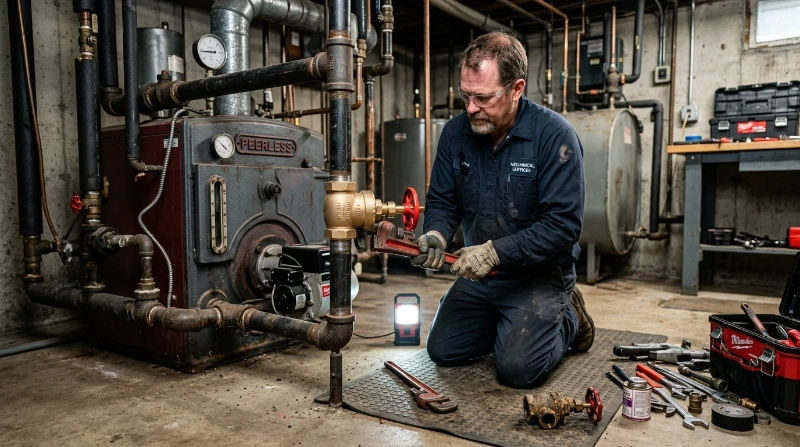
The phone rings on a cold morning: the house is at 58 degrees and the boiler is silent. Over the phone we ask the owner to check the emergency switch at the top of the basement stairs and look at the sight glass. A surprising number of calls end right there, with a switch someone bumped or a water line that dropped below the glass. If not, a tech heads out.
At the boiler, our first look is the low water cutoff. If the water dropped and the cutoff locked out the burner, it did its job, and the real question is where the water went. We check the feeder, look along the wet return, and study the glass for a dirty, bouncing line. Then we refill slowly and watch the burner come back.
If the water is fine, we follow the call for heat. We raise the thermostat, check for 24 volts at the control, and listen for the igniter or watch the pilot. A weak thermocouple or a dirty flame sensor will light the burner and then drop it a few seconds later. We take readings instead of guessing, because swapping parts on a hunch gets expensive fast.
Once the burner runs, we stay through a full cycle. We watch the gauge rise, check that the pressuretrol cuts out under 2 psi, and confirm steam reaches the farthest radiator. We show the owner the failed part, write down what we found, and point out anything worth watching. Then we leave the house warming up, not just the boiler running.