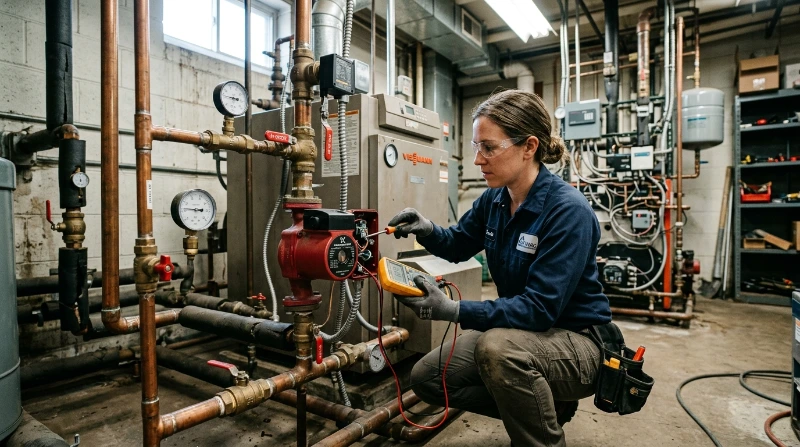
The call: water dripping from a radiator vent in the living room, and a hiss that never seems to stop. We start at the boiler, not the radiator. The sight glass shows a jumpy water line that bounces half an inch, and the glass itself is stained brown. That tells us the water is dirty before we touch a single control.
Dirty water foams when it boils, and foam carries water up the risers along with the steam, which techs call priming. That wet steam reaches the radiator vent, and the vent spits. So we drain a few gallons from the bottom, then skim the surface through the skim tapping until the water runs clear and the line settles. On an old boiler that step alone can take an hour.
Next is pressure. This pressuretrol was set to cut out at 4 psi, likely left over from a past service call. We bring it down and check the differential, or suggest a vaporstat if the system was built for ounces. A house this size heats fine on well under 2 pounds. The old steamfitters who piped these Craftsman homes understood that, and they designed the system around it.
Last, we look at the vent itself. Years of wet steam had fouled it, so it was stuck partly open. We replace it, check that the radiator pitches toward the valve, and make sure the supply valve sits fully open. Then we fire the boiler and stand in the living room to listen. Quiet vent, dry floor, steady heat.