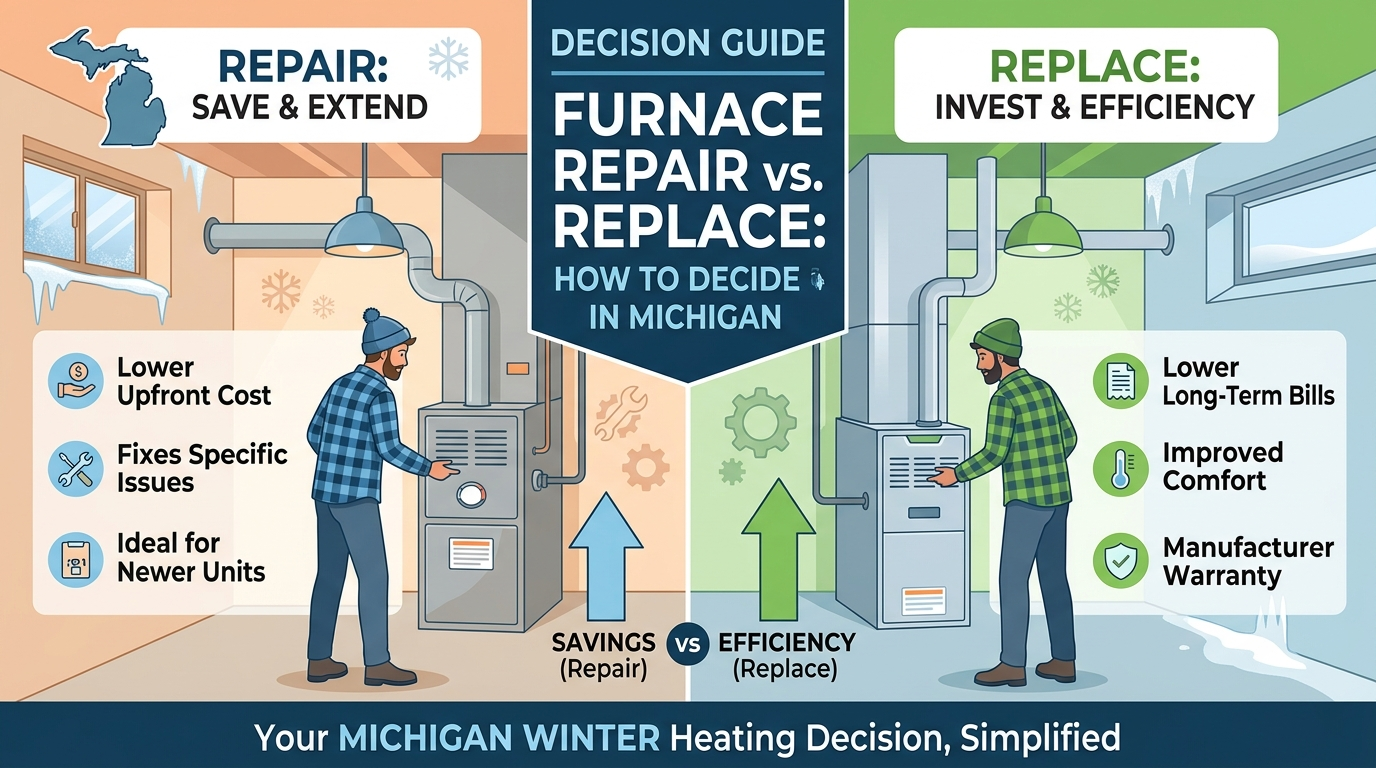
Winter in Michigan can be very long, cold, and unpredictable. As such, having an efficient and effective furnace is of great importance in keeping your home cozy and comfortable. The first thing that may come to mind when you realize that there is something wrong with your heating system is to determine whether to repair or replace your furnace.
The following article is dedicated to the examination of criteria that would help you make the right choice.
Signs Your Furnace Needs Repair
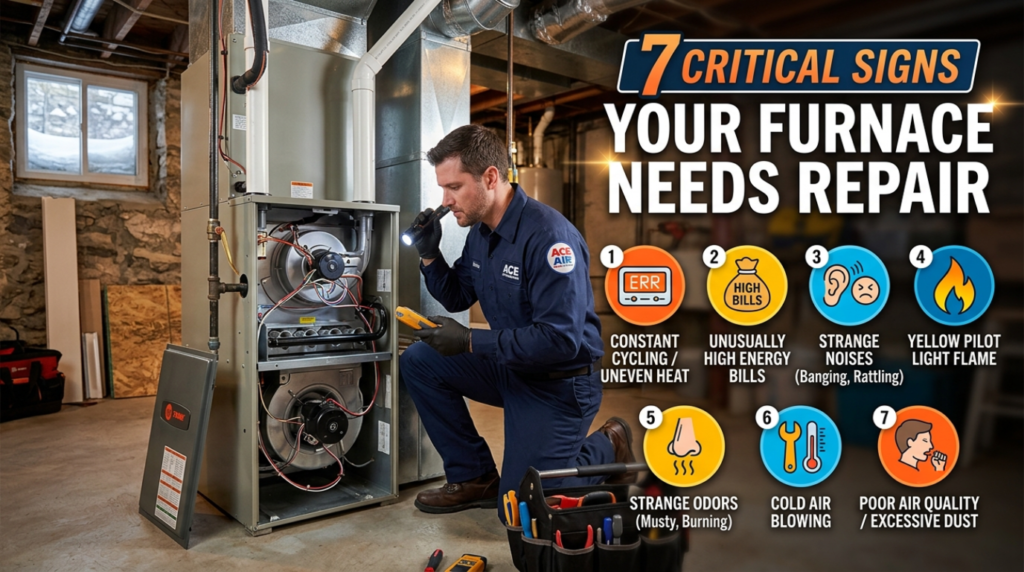
Not every furnace problem means you need a new system. Many common issues can be fixed quickly and at a reasonable cost.
Consider furnace repair if you notice:
- Uneven heating in different rooms
- Strange noises like banging or rattling
- Weak airflow from vents
- Furnace cycling on and off frequently
- Dirty filters causing reduced performance
- Minor thermostat problems
- Small ignition or sensor issues
If your furnace is under 10 years old and has been well maintained, repairing it is usually the most cost-effective option.
When Furnace Replacement Is the Better Choice
Sometimes repairing an old furnace only delays a bigger problem. If repairs become frequent or expensive, replacing the unit can save money over time.
A new furnace may be the right choice if:
- Your furnace is over 15–20 years old.
- Repair costs are more than half the price of a new unit.
- Your energy bills continue to increase.
- The furnace breaks down several times each winter.
- Your home never feels evenly heated.
- Parts for your older model are difficult to find.
Modern furnaces are much more energy efficient, helping reduce heating costs during Michigan’s long winter season.
Compare Furnace Repair vs Replacement
| Furnace Repair | Furnace Replacement |
|---|---|
| Lower upfront cost | Higher initial investment |
| Best for newer systems | Best for older systems |
| Quick solution for small issues | Long-term solution |
| Extends furnace life | Improves energy efficiency |
| May require future repairs | Fewer repair needs |
Looking at both short-term and long-term costs helps you make the best financial decision.
How Often Does Your Furnace Need Repairs?
A single repair every few years is normal. However, repeated service calls are a warning sign.
If you have repaired your furnace multiple times within the last two years, replacement may cost less in the long run. A professional team like Abbco Heating and Cooling can help you choose the right furnace replacement option for your home.
Repair Costs vs Replacement Costs
A helpful rule many HVAC professionals use is the 50% Rule.
If the repair cost is close to or exceeds 50% of the price of a new furnace, replacement is usually the better choice.
For example:
- Minor sensor repair: Repair
- Blower motor replacement on a newer furnace: Usually repair
- Heat exchanger failure on an older furnace: Often replace
- Multiple major component failures: Replace
Always compare both immediate costs and future repair expenses before deciding.
Benefits of Replacing Your Furnace
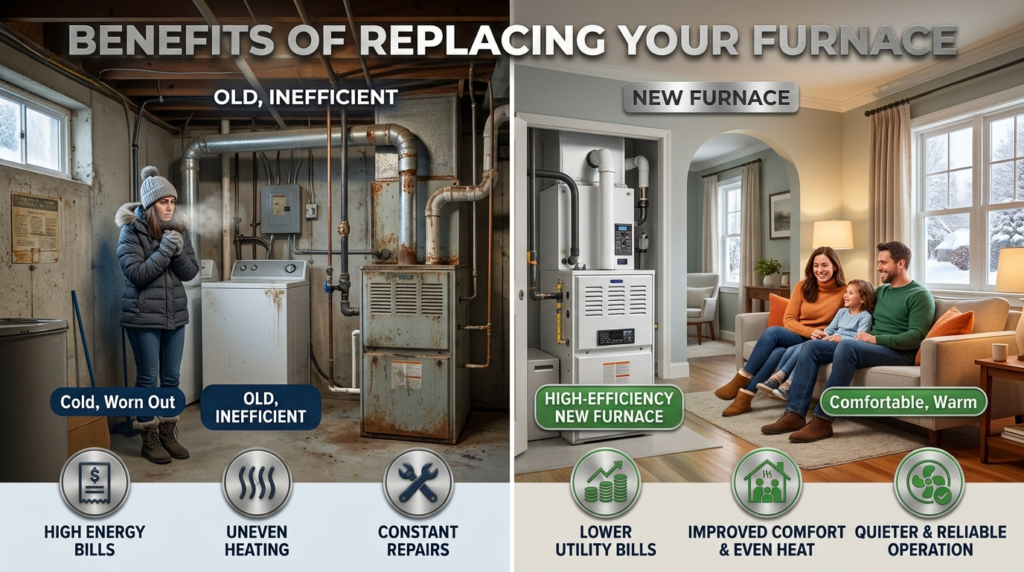
Installing a new furnace offers several long-term advantages.
Benefits include:
- Improved heating performance
- Lower utility bills
- Better indoor comfort
- Quieter operation
- Fewer unexpected breakdowns
- New manufacturer warranty
- Increased home value
Although the upfront cost is higher, many homeowners recover part of the investment through lower energy bills and fewer repairs.
How Michigan Weather Affects Your Decision
Michigan experiences freezing temperatures for several months each year. Your furnace works harder than systems in many other states.
Because of this heavy workload, an older furnace may struggle to keep up during extreme cold. Replacing an aging furnace before winter arrives can help prevent emergency breakdowns when heating is most important.
Conclusion:
The choice between repairing and replacing the furnace depends on the age of the furnace, its history of repairs, efficiency, and its general condition. Small repairs are recommended on furnaces that are relatively new. But for older furnaces that are less efficient and have a history of requiring repairs, it is more advantageous to replace them.
Before taking a decision, get your heating system checked by an HVAC technician. The thorough evaluation would give you an idea if the repair would be able to make your system function optimally or not.